Advanced Hirschsprung Disease Treatment in India for Infants and Children
Hirschsprung’s disease is a congenital disorder that primarily affects the large intestine and, in some cases, a portion of the small intestine. The condition occurs due to the absence of specialized nerve cells, known as ganglion cells, in a segment of the bowel. These nerve cells are essential for coordinating peristalsis — the wave-like muscle contractions that move stool through the intestine. Without them, the affected bowel segment cannot relax, leading to functional blockage and severe constipation.
Early diagnosis and timely Hirschsprung Disease Treatment in India are crucial to prevent complications such as bowel enlargement, infection, and impaired growth.
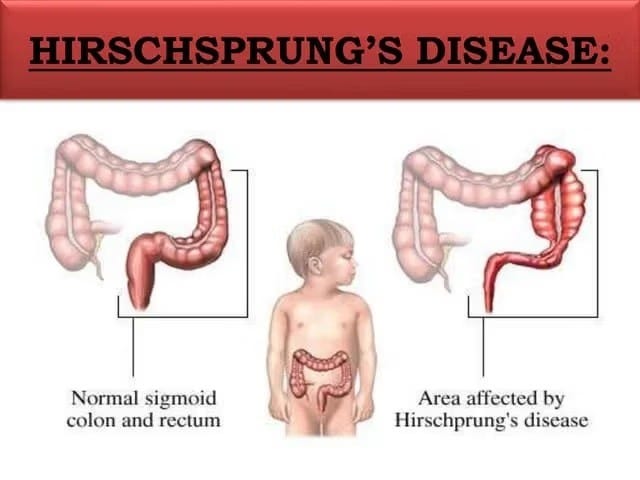
Why Hirschsprung’s Disease Develops:
During fetal development, nerve cells migrate along the intestinal tract from the mouth to the anus. In children with Hirschsprung’s disease, this migration stops prematurely, leaving part of the intestine without nerve supply. As a result, stool cannot pass through normally, causing accumulation and intestinal dilation.
The condition is more commonly seen in boys than girls and often presents within the first few weeks of life, although milder cases may appear later in childhood.
Common Symptoms of Hirschsprung’s Disease:
Symptoms vary depending on the length of the affected bowel segment and the child’s age.
In Newborns:
- Failure to pass stool within the first 48 hours after birth
- Progressive abdominal distension
- Vomiting green or brown material
- Feeding difficulties
In Older Children:
- Chronic constipation that worsens over time
- Poor appetite and weight loss
- Delayed growth
- Passage of small, watery stools
Persistent constipation and abdominal swelling in infants and children should always prompt evaluation by a pediatric specialist.
How Hirschsprung’s Disease Is Diagnosed:
Several investigations help confirm the diagnosis:
- Abdominal X-ray: May show bowel dilation and absence of stool in the rectum
- Barium enema: Identifies narrowed bowel segments and areas of obstruction
- Rectal biopsy: The most definitive test, confirming absence of ganglion cells under microscopic examination
Accurate diagnosis allows doctors to plan the most effective surgical approach.
Surgical Treatment for Hirschsprung’s Disease:
Surgery is the definitive treatment. The goal is to remove the non-functioning bowel segment and restore normal bowel continuity.
The standard procedure is called a pull-through surgery, where the affected portion of the intestine is removed, and the healthy bowel is connected directly to the anus. This can be performed using open surgery or minimally invasive laparoscopic techniques.
In many children, this is done as a single-stage operation. However, in severe cases where the child is critically ill or has significant bowel infection, a temporary ostomy (stoma) may be created first. This allows the intestine to heal before definitive pull-through surgery is performed.
Advanced Hirschsprung Disease Treatment in India focuses on minimally invasive techniques, reduced hospital stay, and faster recovery.
Long-Term Outlook and Follow-Up:
Most children improve significantly after surgery, but long-term follow-up is essential. Some may experience bowel control issues, constipation, stool leakage, or recurrent infections. With proper medical guidance, dietary adjustments, and regular monitoring, most children lead healthy, active lives.
#Best Pediatric Surgeon in Delhi #Vesicoureteral Reflux Surgery Child In Delhi
Comments
Post a Comment